What the Medium Made | How Every New Technology Reshaped the American Presidency
The room smelled of cigarette smoke and old paper. A single lamp burned on the desk. And in the wheelchair, adjusting his reading glasses, was the thirty-second President of the United States who, on this particular March evening in 1933, was about to do something no president had ever done before.
He was going to speak with the whole country. Not to Congress. Not to a hall full of supporters. Not to a rally. To everyone. Right where they sat.
Twelve million Americans were out of work. Banks had been failing by the thousands. Farmers were watching their land being repossessed. The newspapers had reported it, Congress had debated it at length, and none of it seemed to help. Fear had settled into the country; it was almost a currency.
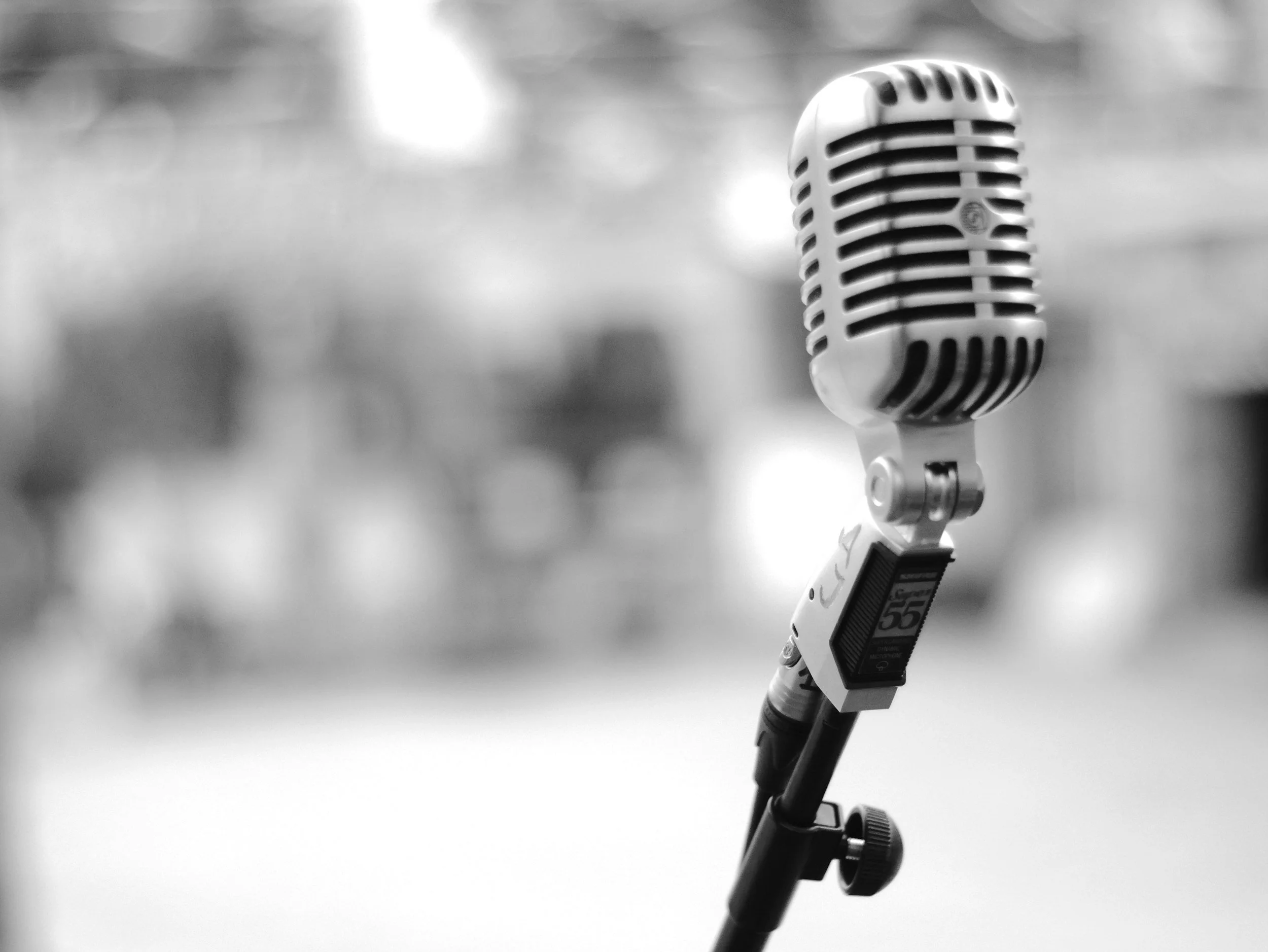
A CBS technician adjusted the microphone on the desk. Franklin Roosevelt looked at it and adjusted the angle, ever so slightly. He cleared his throat and leaned forward. Then, in the warm, comfortable tone, he said:
"I want to talk for a few minutes with the people of the United States about banking."
The first Fireside Chat had begun. American politics would never be quite the same.
The Old Way had a Limit
Before Roosevelt used the microphone, presidents reached the American public the way they always had, through print. Newspapers carried their speeches. Pamphlets circulated their arguments. Small groups of supporters filled halls for a rally. And for the truly ambitious, there was the national tour.
Consider Woodrow Wilson. In the autumn of 1919, Wilson set out on an eight-thousand-mile rail journey, forty speeches in twenty-two days, in a desperate attempt to win public support for the League of Nations. He was trying to go over the heads of a skeptical Senate and speak directly to the people. He collapsed from exhaustion in Pueblo, Colorado. Suffered a stroke days later. And the League died in the Senate anyway.
The lesson was bleak: the old methods had hard limits and a human cost.
Radio changed all of that. Though, and this is worth saying, not immediately, and not in the hands of everyone who tried it. Like every new technology, there was an adoption period, one full of excited supporters and naysayer skeptics. There were attempts before FDR.
Warren Harding was technically the first president to speak on the airwaves, a brief dedication ceremony in 1922, picked up by a local Washington station. Calvin Coolidge used radio with some success. Herbert Hoover made occasional addresses; not like that mattered given his circumstances. But these men treated the new medium the way a Victorian gentleman might treat a telephone: useful, perhaps, but not quite dignified. They read formal speeches in formal tones, practiced and practical, professional and broad. Very rarely did it sound like they were speaking to the individual American, and the result sounded about as warm as a legal brief.
Roosevelt understood something his predecessors had entirely missed. The radio was not a stage. It was a conversation. It afforded something different, and with the right mindset, created something different. When Americans gathered around their radio sets in the evenings, they weren't an audience in any traditional sense; they were neighbors, leaning in, curious, and a little anxious. The voice on the radio became a guest in their home. And so Roosevelt leaned in with them. He spoke without formality, without theatrical projection. He used simple words. He explained complicated things, the mechanics of bank reserves, the logic of wartime rationing, in a language a farmer or a factory worker could follow. He said "my friends" and probably meant it.
The results were immediate and, frankly, staggering. After his first Fireside Chat, which explained why he'd temporarily closed the nation's banks, Americans began to actually return their money to the banking system. Not because Congress had acted. Not because the newspapers had endorsed the policy. But because a man had spoken to them directly, calmly, and honestly, and they believed him.
Half a million letters arrived at the White House in the first week in support of the fireside chats. People wrote to say that they trusted the President. That they were putting their money back into the banks. He had spoken to them as equals, and through their letters, they responded in kind. Roosevelt would deliver around thirty Fireside Chats over twelve years, through depression and world war, and each time, the principle was the same: the presidency had become a presence in the home. A voice you could trust. A voice that called you, friend.
This was new. And it was powerful. In ways, as we'll see, that cut in more than one direction.
The Camera Doesn’t Lie…sort of
Television arrived in American living rooms in the late 1940s with a cautious momentum. In some ways, Americans had just gotten used to radios being in their home, only to be confronted by a new appliance that combined sound with pictures. But by 1952, roughly twenty million sets were in American homes, and Dwight Eisenhower became the first presidential candidate to use television advertising in a national campaign.
His opponent, Adlai Stevenson, refused. Remember the cycle cited earlier about nay-sayers with new technology, yeah, he was part of that. He called it the 'hucksterism' of television advertising and believed the medium to be beneath serious, honest politics. He did not remember the history of the radio, how it let a President speak to Americans as equals, in their words, and in their language. This ignorance and attitude did not serve him well.
Stevenson lost. Twice.
But the real reckoning in this new mode of communication came on the evening of September 26, 1960. The first televised presidential debate in American history. And what happened that night rewrote the rules of how a constitutional republic looked.
Senator John F. Kennedy arrived at the CBS studios in Chicago tanned, rested, and impeccably dressed. He had spent the previous days in Florida, preparing in the sun. Vice President Richard Nixon arrived, having just finished two weeks of exhaustive campaigning through all fifty states. He had recently been hospitalized with a knee infection, had lost fifteen pounds, and looked like it. Under the studio lights, his five o'clock shadow read as sickly and evasive. He refused the makeup artist's offer of help, either due to pride or overconfidence. And under the lights, he began to sweat.
Seventy million Americans watched.
Those who listened on the radio, and there were still millions who did, largely concluded that Nixon had held his own, perhaps even won on points. But those who watched on television saw something else entirely. Post-debate surveys told the story with blunt clarity: television viewers believed Kennedy had won the debate. Among radio listeners, the verdict was reversed.
The same debate. Two completely different contests, depending on which medium you used to follow it.
It wasn't simply that Kennedy was more handsome, though viewers stated he was. It was that he had mastered what the camera actually measures, not words, exactly, but the quality of presence. Confidence. Ease. The ability to look into a lens and make sixty million viewers feel, simultaneously, like he was speaking to each of them individually.
Nixon was a skilled debater and extremely intelligent. But the medium was not evaluating intelligence. It was about evaluating the image. And the two men were not playing the same game.
Kennedy won the election by fewer than 113,000 popular votes, which was one of the narrowest margins in American history. Whether those ninety minutes on TV made the difference is a question historians still debate, and something I will ask Jon about during our discussion. What is beyond argument is what the debate proved: in the television age, how a president looked and felt on camera had become a measure of him being trusted to lead.
The implications continued through the decades that followed. Lyndon Johnson, a proud liar and masterful political operator, was somewhat undone in part by the nightly television coverage of Vietnam. The first war brought into American living rooms in almost real time. And the images, no matter how the White House tried to shape them, told their own story. Reporters were able to get details on tactics, strategy, and battles. They reported the results. And no matter what the White House or federal government told them, they had a medium to do what they wanted, sometimes to the detriment of the American soldier.
Nixon's Watergate hearings played out on television in the summer of 1973 in much the same way. Whatever Americans thought of the abstract constitutional questions, what they saw was a president's men lying under oath on national television. The boldness learned by the press during the Vietnam War increased, and the pursuit of truth continued until the truth was found.
Ronald Reagan arrived in 1981, having spent twenty years learning the grammar of the camera. He had been an actor, a television host, a pitchman, and a political communicator of remarkable precision and clarity. Where Kennedy had been naturally good on TV, Reagan was professionally so, he understood the thirty-second soundbite, understood lighting and staging, and, most importantly, that television does not reward complexity. It rewarded clarity. Warmth. Speaking to the individual and the appearance of unshakeable conviction. His critics called it acting. His supporters called it leadership. By the 1980s, through actions that played in the words he communicated, the majority of Americans called it sincere.
The ability to speak through radio and television directly to the individual American served those who understood how to make said communications personal. They proved detrimental to those who believed that the medium and technology itself was enough. The winners saw that the closer they could get to the voter, their living room, car, and workplace, the more personal they had to be. As the age of technology expanded, so did this truth.
Logging On
Bill Clinton's White House launched the first presidential website in 1994. By modern standards, it was laughably simple…a few pages of text, a photo, a welcome message. But the act itself was a signal: the internet existed, the presidency had arrived on it, and whatever came next would be different.
What came next took roughly a decade to fully develop. The first stirring of something genuinely new came from an unlikely source: Howard Dean, former governor of Vermont, whose 2004 presidential campaign used the internet to raise small-dollar donations and organize volunteers in ways the political establishment had never seen. Dean lost the Democratic primary because no level of technology could compensate for that maniacal scream, but the playbook he wrote was studied obsessively.
Four years later, Barack Obama picked it up and ran with it. The 2008 Obama campaign was, by any measure, the first truly digital presidential campaign in American history. It raised $750 million with donors activated by email and social media. It built a volunteer network of millions through platforms that hadn't existed eight years earlier. It used data, voter data, behavioral data, and demographic data, to target messages with a precision that would have seemed like science fiction to a previous generation of campaign managers. Obama seemed to embody the medium's ethos: young, connected, and online. His team sent his first tweet in 2007. When he took office, the White House Instagram, YouTube, and Facebook pages were not afterthoughts. The presidency had gone social, with the social media giants even being granted offices during the Obama Presidency. President Obama had not only used social media, but had gone social-native, getting once again closer to the voter and appealing to each person in the most individual way…their social feeds and their social posts.
But it was the forty-fifth president who revealed just how radically the new medium could reshape the office itself. Donald Trump's relationship with Twitter was unlike anything American political history had produced. Where Roosevelt had used radio to speak to the country through a prepared script, and Kennedy had used television to project an image, Trump used Twitter to speak around every institutional filter that had, up to that point, stood between a president and the raw public. No press secretary. No speechwriter. No editorial board. No matter what time of the day or night, the President of the United States could (and did) say exactly what he wanted to say, to eighty-seven million followers, in real time. Supporters argued that this was transparency in its purest form, a leader speaking directly to the people, uncensored and unapologetic. Critics argued it was something else: a firehose of assertion and counter-assertion that made rational public discourse nearly impossible.
Both arguments contained some truth.
When Twitter permanently suspended Trump's account in January 2021, it raised a question with no clean answer: who, exactly, holds power over presidential communication? A president's voice was once filtered by newspaper editors. Then by television producers. Now, at least in part, by the terms of service of a private technology company. While President Trump went on to create his own social network, swearing off Twitter only to return to the platform under the new name of X and leadership of Elon Musk, the question still remained.
The ground, as always, kept shifting beneath everyone's feet.
The Mic and the Mirror
It is tempting to read this history as a simple story of progress with better tools, wider reach, and a more connected republic. For the purposes of this conversation, let’s resist that temptation.
Each new medium has reshaped communication in ways that were both liberating and dangerous, and often at the same time. Radio gave Americans a president they could hear, humanizing the office, speaking directly to the American people during the good times and during its darkest hours. But radio also gave European dictators the same platform, and they used it with catastrophic effect. The intimacy of the medium was morally neutral, but it amplified the character of whoever sat in front of the microphone, for good or for ill. In this, the amplification of the good and evil is less about technology and more about reach and impression. One person might find far more followers than they ever imagined. Another might reach far fewer hearts than they hoped. The medium doesn't correct for that distortion. It just makes it bigger. This is not a new problem. It predates radio by centuries, and it has not gone away. If anything, social media has made it worse, giving every voice the potential for mass reach while stripping away almost every filter that once stood between a message and its audience, and any consequences that held such filters in check.
With television, the presidency became visible, and visibility created its own distortions. A republic choosing its leaders partly on the basis of camera presence will, over time, systematically favor the telegenic over the wise. Whether the television age produced better or worse presidents is a conversation that Jon and I will have, and encourage you, our audience, to do the same. What is clear is that it produced different ones, leaders who understood that governing and performing had become, in some measure, the same act.
The internet has done something more radical still. It has given the presidency a direct line to every citizen, and given every citizen a direct line back, and to each other, in ways the presidency cannot control and barely understands. The result is a public sphere that is simultaneously more democratic and more chaotic, more informative and more polluted, more connected and more fragmented, all at once. The volume of information has not made truth easier to find. If anything, it has made the search more exhausting, and the temptation to stop searching even more understandable. Such expansion of speech places a new kind of responsibility not just on those who speak, but on those who listen: to evaluate carefully, to resist the convenient conclusion, and to act only on what can actually be verified as accurate or true.
Each generation of presidents has had to learn a new instrument and a new tactic. FDR learned to use the microphone. Kennedy learned the camera. Obama and Trump learned the feed. The medium changed; the underlying challenge did not. This is true because the presidency has always been, at its core, an act of persuasion and an ongoing argument that a particular person, in a particular moment, deserves the trust of a free people.
What the history of presidents and media ultimately reveals is something about the republic itself: it is not a static arrangement but a living negotiation, with terms that change constantly through new technologies, new voices, and new ways of seeing and being seen, and most importantly, remembered. The question in each new era is not whether the president can master the medium because most of them, eventually, do. The deeper question is whether the medium is serving the republic…or consuming it.
Roosevelt knew the answer he wanted. He leaned into the microphone, and he spoke clearly, and the people listened. For one cold March evening in 1933, that was enough. Whether it is still enough is the question our own era has not yet finished answering.